

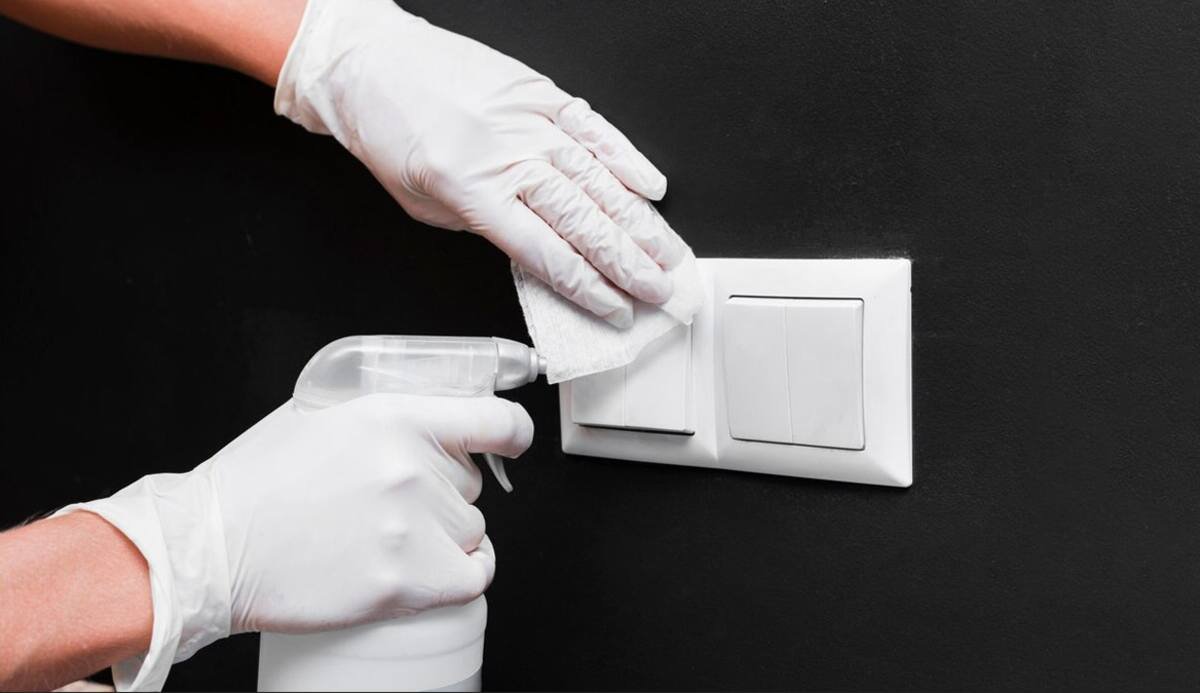
Switchboards are among the most frequently touched surfaces in any home, yet they are often overlooked during regular cleaning. Over time, fingerprints, dust, kitchen grease, and everyday grime can accumulate on switches and switch plates, making them look dirty and discoloured.
The problem can be particularly noticeable in kitchens, where cooking oil and grease settle on nearby surfaces. Even freshly painted walls can look less appealing when surrounded by yellowed or stained switchboards.
Fortunately, a few simple cleaning techniques can help remove surface dirt, reduce greasy marks, and improve the appearance of household switchboards. However, electrical safety should always come first when cleaning switches and sockets. Here are some practical tips to clean switchboards and deal with yellow stains safely.
1. Remove Dust Before Cleaning

Use a soft, dry microfiber cloth or a soft-bristled brush to remove dust from the outer plate and its edges. A vacuum cleaner with a suitable brush attachment can also help collect loose dust from the surrounding area.
Important: Turn off the appropriate circuit at the breaker before cleaning. Do not insert brushes or other objects into switch gaps, sockets, or openings.
2. Remove Grease and Stubborn Marks

Follow these steps:
-
Switch off the relevant electrical circuit at the breaker.
-
Apply the cleaning solution to the cloth, never directly to the switchboard.
-
Gently wipe the accessible outer surface without allowing moisture to enter the switches or sockets.
-
Use a separate cloth lightly dampened with clean water to remove soap residue, if needed.
-
Immediately dry the surface with a clean, soft cloth.
Avoid soaking the switchboard or using abrasive scrubbers. Vinegar and water are sometimes recommended for household cleaning, but they are not suitable for every switch plate or finish. Follow the manufacturer’s cleaning instructions and avoid applying unapproved chemicals to electrical components.
3. How to Remove Yellow Stains From Switchboards

If the yellow colour comes from surface dirt, gentle cleaning may improve the appearance. However, yellowing caused by ageing or chemical changes in the plastic may not disappear with ordinary household cleaners.
Here is what you can try:
-
Turn off the circuit supplying the switchboard.
-
Check the manufacturer’s instructions to identify a suitable cleaner.
-
Clean the accessible surface with a soft cloth and mild soapy water.
-
Wipe away any residue using a clean, lightly dampened cloth, if appropriate.
-
Dry the surface thoroughly before restoring power.
Some people use baking soda paste to tackle stubborn stains on plastic. However, baking soda is mildly abrasive and may scratch glossy finishes or leave a dull appearance. Avoid rubbing it directly onto a switchboard unless the manufacturer confirms that it is safe for the specific material.
If the plastic remains yellow after cleaning, replacing the switch plate may be a better option than using stronger chemicals or abrasive methods.
4. Essential Safety Precautions When Cleaning Switchboards
Electrical switchboards require extra care because moisture and electrical components can create a risk of electric shock.
Keep these precautions in mind before starting:
-
Turn off the power: Switch off the relevant circuit at the electrical breaker before cleaning.
-
Never spray liquid directly: Sprays can allow moisture to enter switches, sockets, and electrical connections.
-
Avoid wet cloths: Use only a minimally damp cloth on suitable external surfaces, and keep all openings dry.
-
Do not dismantle switches: Avoid removing switch plates or opening electrical fittings unless you are qualified to do so.
-
Avoid harsh chemicals: Bleach, strong solvents, and abrasive cleaners may damage plastic or its protective finish.
-
Check for damage: Do not clean damaged, cracked, loose, unusually hot, or exposed-wiring fittings yourself. Have them inspected by a qualified electrician.
If liquid enters a switchboard, do not touch or operate the affected switches. Keep clear and have the circuit and fitting checked by a qualified electrician before use.
5. How to Keep Switchboards Clean for Longer

Try these simple habits:
-
Wipe accessible switch plates periodically with a soft, dry cloth.
-
Clean kitchen switch plates more frequently because grease can accumulate quickly.
-
Remove surface marks early instead of allowing them to build up.
-
Keep cleaning products away from switches and sockets.
-
Follow the manufacturer’s instructions for the material and finish.
These small steps can help maintain a cleaner appearance without relying on aggressive cleaning products.
Frequently Asked Questions (FAQs)
1. How can I clean a dirty switchboard at home?
Turn off the relevant circuit, remove loose dust with a dry microfiber cloth, and clean the suitable external surface with a soft cloth lightly dampened with mild soapy water. Keep liquid away from openings and dry the surface thoroughly.
2. How do I remove yellow stains from white switches?
Start with gentle cleaning using mild soapy water. If the yellowing is caused by ageing or discolouration within the plastic, household cleaners may not restore the original colour. Replacing the switch plate may be necessary.
3. Can I use vinegar to clean electric switchboards?
Vinegar is not suitable for every switchboard material or finish. Use it only if the manufacturer recommends it, apply no liquid directly to electrical fittings, and ensure the power is switched off before cleaning.
4. Is baking soda safe for cleaning yellow plastic switches?
Baking soda can be mildly abrasive and may scratch or dull certain plastic finishes. Check the manufacturer’s guidance before using it, and avoid aggressive scrubbing.
5. How often should switchboards be cleaned?
The frequency depends on how quickly dust and grime accumulate. Kitchen switchboards may need more frequent attention than those in bedrooms or less-used areas.
Conclusion
Cleaning switchboards regularly can make your home look tidier and help prevent dust, fingerprints, and kitchen grease from accumulating. A soft cloth, mild soapy water, and careful cleaning techniques are generally sufficient for routine maintenance.
Remember that not all yellow stains can be removed, particularly when plastic has discoloured with age. Avoid harsh chemicals, excessive moisture, and abrasive scrubbing. Most importantly, switch off the appropriate circuit before cleaning and consult a qualified electrician if the switchboard is damaged or shows signs of an electrical problem.

