

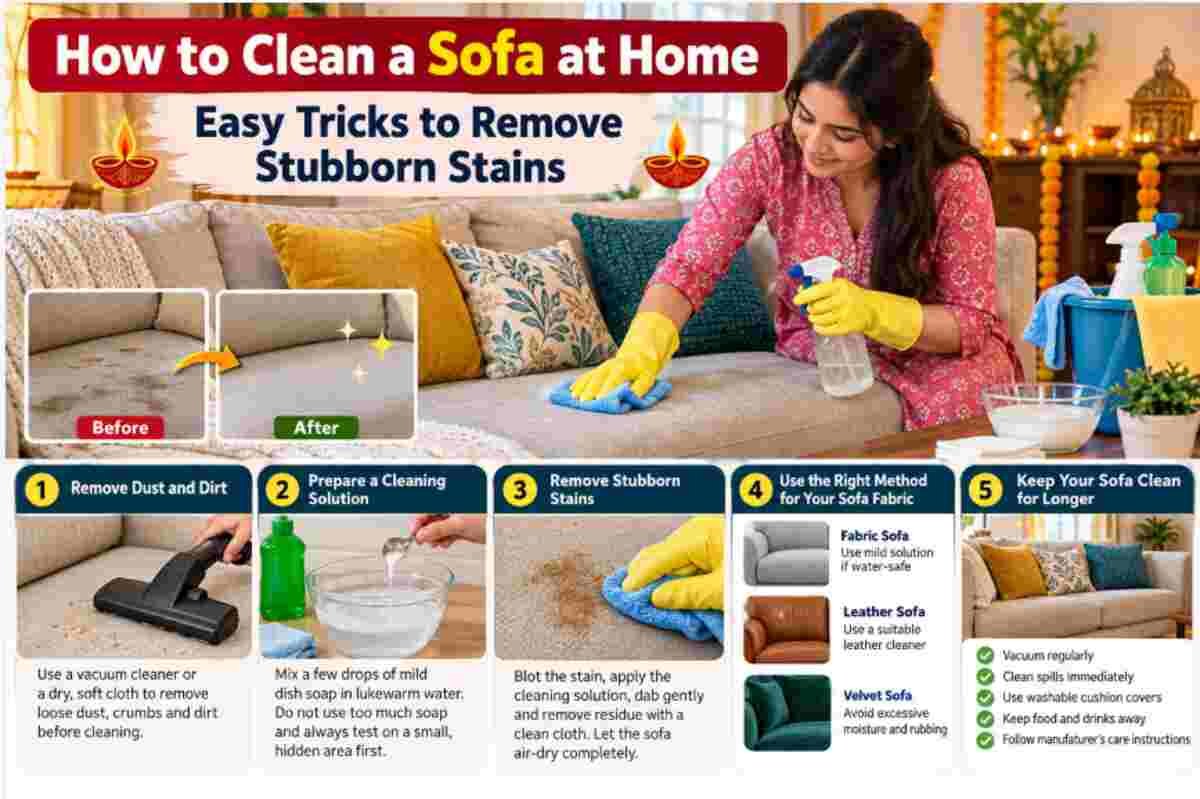
Diwali cleaning is the perfect opportunity to refresh every corner of your home. While people often focus on cleaning floors, windows, curtains and furniture, the sofa is one household item that can easily be overlooked. Since it is used every day, dust, food crumbs, beverage spills and everyday grime can gradually make its surface look dull and dirty.
Stubborn stains can make the problem even more frustrating, leading many people to consider expensive cleaning products or professional services. However, depending on the type of sofa fabric and the nature of the stain, simple cleaning methods may help restore its appearance.
The key is to choose the right cleaning technique and avoid products that could damage the upholstery. Here are some easy sofa-cleaning tips to help you freshen up your living room before Diwali.
1. Remove Dust and Dirt Before Cleaning Your Sofa
Before tackling stubborn stains, start by removing loose dust, crumbs and dirt from the sofa. Cleaning a dusty surface with a wet cloth can spread the dirt and leave additional marks on the fabric.
A vacuum cleaner with an upholstery attachment is a convenient option for removing dust from the seating area, backrest, armrests and seams. Remove the cushions, if possible, and clean underneath them, paying attention to corners where crumbs and dust often accumulate.
If you do not have a vacuum cleaner, use a clean, dry, soft cloth to gently remove surface dust. Avoid vigorous brushing, particularly on delicate fabrics such as velvet.
2. Prepare a Simple Sofa-Cleaning Solution at Home
A mild cleaning solution may help remove everyday marks from upholstery that is suitable for water-based cleaning. However, not every sofa can be cleaned safely with water or homemade mixtures.
First, check the manufacturer’s care label or cleaning instructions. If water-based cleaning is permitted, mix a few drops of mild dish soap into a cup of lukewarm water.
Avoid using excessive soap, as it can leave a sticky residue that attracts more dust. Do not automatically add vinegar or baking soda to the mixture, because these ingredients may affect certain dyes, finishes and fabrics.
Important: Always test the cleaning solution on a small, hidden area before applying it to a visible part of the sofa. Allow the test area to dry and check for colour changes, watermarks or changes in texture.
3. How to Remove Stubborn Stains From a Sofa
Stubborn stains require careful treatment. The best method depends on what caused the stain and the type of upholstery.
Follow these steps when water-based cleaning is suitable for your sofa:
- Blot the stain first: Use a clean, dry cloth to absorb excess liquid. Avoid rubbing, as this can push the stain deeper into the fibres.
- Apply the cleaning solution carefully: Lightly dampen a clean cloth with the mild soap solution. Never pour the solution directly onto the sofa.
- Dab gently: Work on the stained area using small, gentle movements. Avoid soaking the fabric or scrubbing aggressively.
- Remove soap residue: If permitted by the care instructions, use another clean cloth lightly dampened with plain water.
- Allow the sofa to dry: Let the upholstery air-dry completely in a well-ventilated room before using it again.
For food, tea or coffee stains, quick action can often make cleaning easier. However, stains from ink, grease, wine or other substances may require specialised treatment. Avoid experimenting with multiple household ingredients, particularly when the stain is old or the upholstery is delicate.
4. Choose the Right Cleaning Method for Your Sofa Fabric
Different upholstery materials respond differently to water and cleaning products. Using the wrong method can cause fading, shrinkage, watermarks or damage to the surface.
Fabric sofas
Check whether the upholstery allows water-based cleaning. If it does, use a mild solution sparingly and avoid excessive moisture.
Leather sofas
Do not use ordinary dish soap, vinegar or other homemade fabric-cleaning mixtures unless the manufacturer specifically recommends them. Use a suitable leather cleaner and follow the care instructions to protect the finish.
Velvet sofas
Velvet can be sensitive to moisture, friction and changes in texture. Avoid vigorous rubbing and use only a cleaning method approved for the particular upholstery.
Delicate or specialised upholstery
For materials requiring dry cleaning or professional care, avoid water-based homemade solutions. Contact the manufacturer or a professional upholstery cleaner for guidance.
5. Common Sofa-Cleaning Mistakes to Avoid
While cleaning your sofa before Diwali, a few precautions can help prevent accidental damage.
- Do not soak the upholstery with water or cleaning solutions.
- Avoid scrubbing stains aggressively.
- Do not use bleach or strong chemicals unless explicitly approved for the material.
- Never mix different cleaning agents without checking their compatibility.
- Do not use a cleaning product without testing it on a hidden area first.
- Avoid using the sofa until the cleaned area is completely dry.
If the sofa has a large stain, an unpleasant smell, visible mould or delicate upholstery, professional cleaning may be the safer option.
6. Easy Tips to Keep Your Sofa Clean for Longer
Regular maintenance can reduce the amount of dirt that builds up on your sofa and make seasonal cleaning easier.
- Vacuum the sofa and its crevices regularly.
- Clean up food crumbs and liquid spills promptly.
- Use removable, washable cushion covers if the manufacturer permits machine washing.
- Keep food and drinks away from delicate upholstery whenever possible.
- Follow the manufacturer’s instructions for routine care.
- Address stains early rather than allowing them to become deeply embedded.
These simple habits can help your sofa look cleaner and more inviting throughout the year.
Frequently Asked Questions (FAQs)
1. How can I clean my sofa at home?
Start by removing loose dust and crumbs with a vacuum cleaner or dry cloth. If the sofa permits water-based cleaning, use a mild soap solution and a clean cloth to gently dab the affected area. Always test the solution first.
2. What is the easiest way to remove stubborn stains from a sofa?
Blot fresh spills immediately and use a cleaning method suitable for the upholstery. Avoid rubbing the stain vigorously. Older or difficult stains may require a specialised cleaner or professional treatment.
3. Can I use vinegar to clean my sofa?
Vinegar is not suitable for every upholstery material and may affect certain dyes or finishes. Check the manufacturer’s care instructions before using it, and test any approved product on a hidden area.
4. Can dish soap be used to clean a fabric sofa?
A small amount of mild dish soap diluted in water may work on some water-safe fabrics. However, it should not be used on every type of upholstery. Follow the care label and remove any residue as directed.
5. How often should a sofa be cleaned?
Vacuuming every one to two weeks is a reasonable starting point for many households, although homes with pets, children or heavy sofa use may need more frequent cleaning. Treat spills promptly and follow the manufacturer’s recommended cleaning schedule.
Conclusion
A clean sofa can make your living room feel fresher, especially when preparing your home for Diwali. Removing dust regularly, treating spills promptly and using a suitable cleaning solution can help improve the appearance of many sofas without relying on expensive products.
However, the most important step is to identify your sofa’s upholstery type before cleaning it. Always follow the manufacturer’s instructions, test products on a hidden area and avoid excessive moisture. For delicate materials or stubborn stains, professional cleaning may deliver safer results.

