


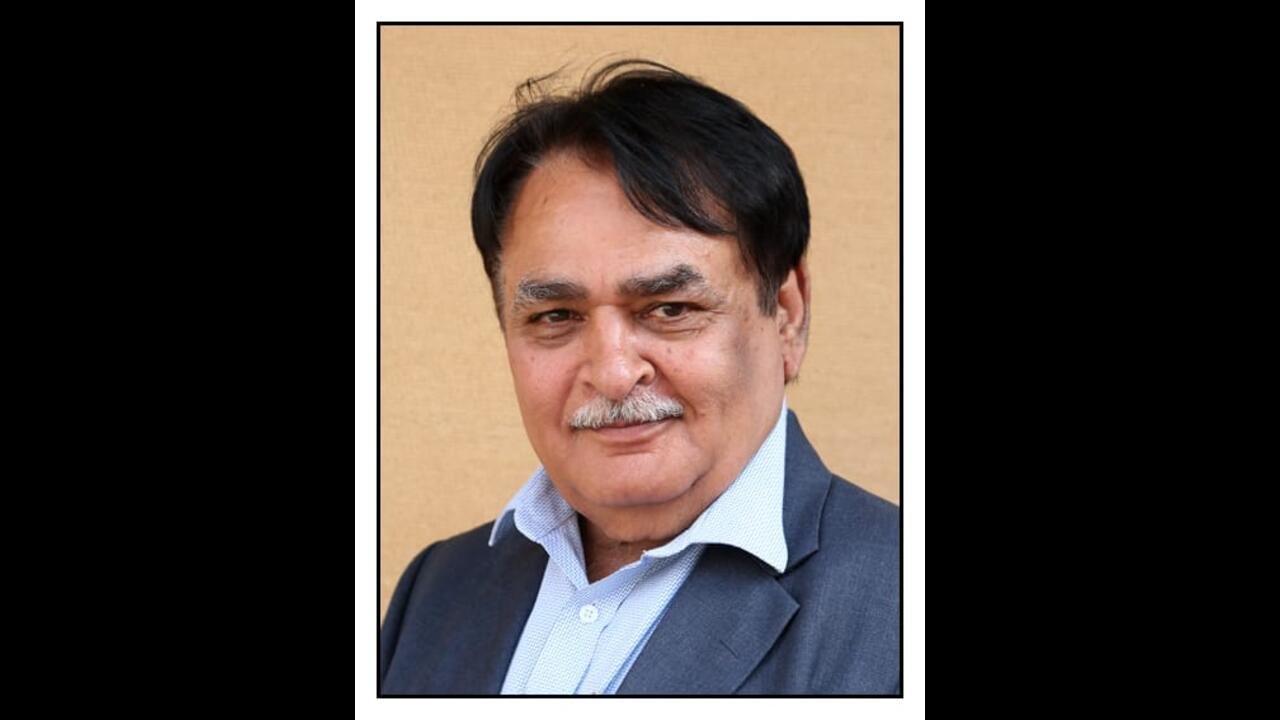
India’s retail and wholesale trade sector, the invisible engine of domestic consumption, has urged the Union Government to address mounting structural stress in the forthcoming Union Budget. Representing millions of small traders, kirana owners, wholesalers, and family-run enterprises, the Ahmedabad Chambers of Commerce Welfare Foundation (CCWF), under the leadership of Chairman Jayendra Tanna, has submitted a detailed memorandum to Prime Minister Narendra Modi and Finance Minister Nirmala Sitharaman, seeking targeted reforms rather than financial handouts. The sector, which supports large-scale self-employment and provides last-mile access to goods across urban and rural India, cautions that without timely policy correction, grassroots commerce could face long-term damage.
At the core of the representation by Ahmedabad CCWF Chairman Jayendra Tanna is the issue of credit imbalance within the MSME framework. While the recent expansion of MSME classification limits was intended to encourage growth, it has blurred distinctions between small retailers and large, well-capitalised enterprises. Banks are increasingly assessing low-turnover traders and high-revenue MSMEs using identical benchmarks, resulting in institutional credit being channelled toward larger players with stronger balance sheets. Small retailers, despite steady cash flows and high employment intensity, are being crowded out. The Foundation has sought a ring-fenced credit allocation for MSMEs with turnover up to ₹100 crore and clearly defined segmentation in lending norms to restore equitable access to finance for first-generation and vulnerable businesses.
The memorandum submitted by Ahmedabad CCWF Chairman Jayendra Tanna also highlights growing distortions in India’s retail marketplace. Small physical retailers are struggling to survive against capital-funded discounting and loss-driven pricing strategies. Uneven enforcement and regulatory gaps have created an imbalanced competitive environment, threatening local entrepreneurship and neighbourhood economies. The trade community has called for a uniform framework to curb predatory pricing across all retail formats and to ensure genuine competitive neutrality between brick-and-mortar stores and digital platforms. Without corrective measures, the submission warns, India risks weakening its traditional trade ecosystem.
GST compliance has emerged as another major concern flagged by Ahmedabad CCWF Chairman Jayendra Tanna. While tax formalisation has broadened the base, it has simultaneously increased compliance costs and interpretational uncertainty for small traders. Frequent notices, inconsistent state-level interpretations, and complex filing procedures have transformed routine taxation into a constant operational risk. The representation urges simplified GST compliance linked to turnover thresholds, nationwide uniformity in interpretation, and a trust-based, non-adversarial approach for small taxpayers. According to the trade body, ease of compliance will strengthen compliance outcomes more effectively than enforcement pressure.
The memorandum also draws attention to the challenges posed by rapid digitisation. While digital adoption is unavoidable, it has imposed additional costs on small businesses without adequate institutional support. From accounting software to online filings and banking portals, traders are being pushed into systems without sufficient training. Ahmedabad CCWF Chairman Jayendra Tanna has recommended budgetary support for free or subsidised digital compliance tools, structured capacity-building programmes, and strengthened multilingual helpdesks. Digital transition, it stresses, should enable traders rather than penalise them for limited technical capacity.
Access to timely working capital remains a persistent hurdle despite consistent turnover and transaction history. Retail and wholesale traders operate on thin margins and high volumes, making liquidity critical for day-to-day operations. The submission proposes dedicated retail trade credit lines through banks, working capital loans linked to GST data, and reduced collateral requirements. Such measures, it argues, would stabilise supply chains, reduce dependence on informal credit, and unlock sustainable growth.
The memorandum concludes with Ahmedabad CCWF Chairman Jayendra Tanna seeking formal recognition of retail and wholesale trade as a core economic sector, with mandatory representation in policy and advisory bodies, underscoring that a resilient retail ecosystem is vital for employment, consumption, and economic stability.
FOR MORE INFORMATION
Email: admn.accwf@gmail.com
WhatsApp. 9824145318

