

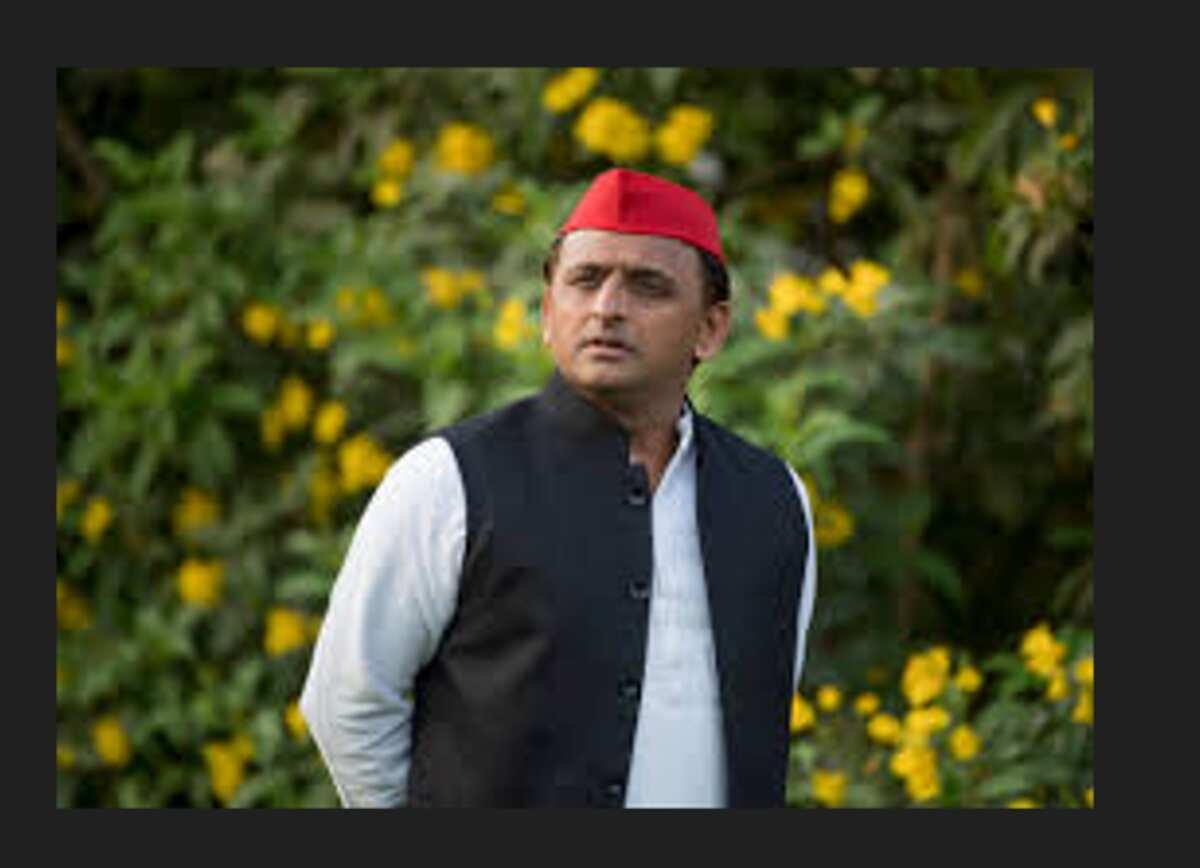
The Samajwadi Party appears to be trying a new look for its student wing as it prepares for the 2027 Uttar Pradesh Assembly polls, from the blue gamcha to jeans and T-shirts.
Uttar Pradesh Samajwadi Party chief Akhilesh Yadav’s recent appearance with a blue gamcha, replacing the party’s traditional red and green colours, has become a talking point ahead of the 2027 Uttar Pradesh Assembly polls. The change coincides with a proposed dress code for the party’s student wing, which is going blue, with students expected to wear blue T-shirts and blue jeans.
The shift has raised questions about whether the SP is attempting to widen its appeal among younger voters and Dalits while maintaining its existing political alliance, the Pichhda, Dalit and Alpsankhyak (PDA).
Blue Takes Centre Stage
For decades, blue has been associated with Dalit politics through the Bahujan movement and the symbolism of BR Ambedkar. The colour is also strongly associated with the Bahujan Samaj Party in Uttar Pradesh.
Although the SP has not specifically described the move as an appropriation of the BSP’s colour politics, the use of blue carries political significance for the party.
The timing is also important. The SP is looking to consolidate the social bloc that helped it improve its tally in the 2024 Lok Sabha polls while presenting itself as a newer and more contemporary political outfit under Akhilesh Yadav.
A More Youth-Oriented Image
The proposed blue T-shirt and jeans combination for the SP’s student wing marks a departure from the more traditional political attire associated with regional parties. Jeans and T-shirts give the party a more youthful and casual image.
Akhilesh Yadav’s own sartorial style has also gradually evolved, with the SP chief increasingly being seen in T-shirts and jeans. The change has attracted attention on social media and represents a departure from conventional political clothing.
The combination of blue and casual attire could allow the party to communicate two messages to voters: social justice and Ambedkarite symbolism to Dalit voters, and generational change to younger voters.
Beyond Symbolism
The SP’s overall strategy appears to go beyond its visual identity. The party has been making greater efforts to reach women, minorities and younger voters, while taking up issues beyond its traditional political base. Dimple Yadav’s growing public presence has also been viewed as part of the party’s move towards a more contemporary and inclusive image.
However, colours and clothing alone will not decide an election. The SP would need to support its outreach to Dalits with organisational representation, leadership opportunities and a focus on issues affecting the community.
Likewise, reaching younger voters will require more than a change in the dress code for the student wing. This electorate is likely to remain focused on employment, education, recruitment, competitive examinations, access to digital opportunities and social mobility.
Shashikant Pandey, Head of the Department of Political Science at Dr Bhimrao Ambedkar University, Lucknow, said the shift to blue appears to be an attempt by the SP to expand the social dimension of its PDA politics. He said the informal dress code could help the party connect with younger voters, while blue remains a well-known Ambedkarite symbol.
One of the SP’s most recognisable visual identifiers is its traditional red cap. The emergence of blue alongside jeans and T-shirts, however, suggests that the party is looking to introduce a new element to its political identity as it gears up for the 2027 Uttar Pradesh polls.

