

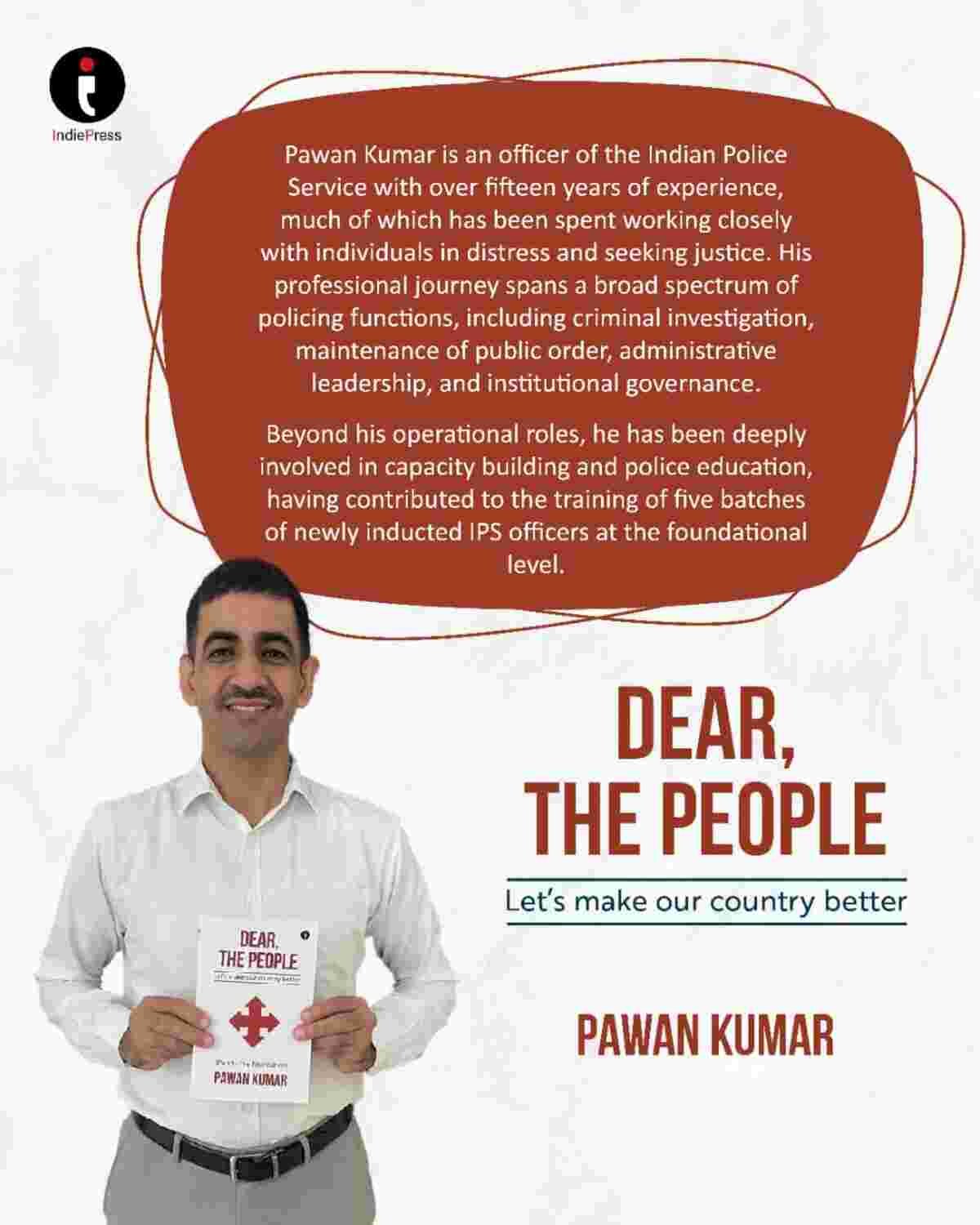
In Dear, The People, IPS officer Pawan Kumar presents a forward-thinking yet practical approach to enhancing governance, making it more efficient, transparent, and citizen-centered. Drawing on over fifteen years of distinguished experience in policing and public administration, he emphasizes that identity verification is fundamental to progress—whether it’s safeguarding children, preventing cybercrime, combating financial fraud, or ensuring welfare benefits reach the intended recipients.
Central to the book is the concept of a Master Agency—Spectra: The Sentinel Commission—which is envisioned to securely establish and safeguard every type of identity: individual, institutional, economic, and digital. Real-life instances of large-scale frauds, counterfeit goods, and cybercrimes demonstrate the pressing need for a unified, trustworthy identity management system.
Dear, The People is a call for collective action—urging citizens, institutions, and policymakers to collaborate in building a safer, more prosperous nation. With optimism and respect for India’s democratic institutions, Pawan Kumar outlines a roadmap to strengthen governance while empowering individuals to actively contribute to national progress. This book provides an inspiring blueprint for inclusive development, showing how verified identities can form the foundation of a stronger, better India.
1. Can you briefly summarize your book and explain how it addresses today’s critical global challenges?
At its core, my book focuses on establishing and verifying all types of identities that shape our lives. This goes beyond personal identification—it includes properties, bank accounts, mobile numbers, social media profiles, businesses, organizations, products, and even actions. Every identity is unique and linked to us in some way.
Identity is the backbone of effective governance, citizen services, democratic integrity, crime prevention, and economic transparency. From tracing missing children and combating human trafficking to curbing corruption, stopping counterfeit products, and promoting sustainable development—identity is the key enabler.
Today, thousands of children remain untraceable due to incomplete identity verification systems. Millions fall prey to cybercrime through fake accounts or fraudulent phone numbers. Billions of rupees are lost to scams involving shell companies, and unverified businesses and counterfeit goods feed a shadow economy. My book conceptualizes a sustainable governance model where every human, institutional, and economic identity is verifiable and secure, thereby laying the foundation for inclusive, transparent, and resilient development.
2. What inspired you to write this book, and what expertise do you bring to this subject?
Throughout my career, I have worked closely with people in distress—families and individuals seeking justice, safety, and fairness. Headlines often tell troubling stories: missing children, counterfeit goods harming
consumers, organized crime, large-scale frauds, narcotics proliferation, and cybercrime. These issues are interconnected, affecting millions of lives.
My professional experience as an IPS officer allowed me to see first-hand how systems function—and where they fall short. This exposure, combined with my personal interest in finding systemic solutions, motivated me to write this book. It is my effort to go beyond temporary fixes and envision a model that addresses these challenges at their root.
3. What key insights or lessons do you want readers to gain?
Every individual and family is part of the larger system we live in, and each one of us is affected by how effectively that system functions. The problems I discuss are tangible, impacting real lives—sometimes directly, sometimes indirectly.
The main message for readers is that an ideal governance system is achievable. The book lays out a practical vision for designing and sustaining a system that protects citizens, ensures justice, and empowers individuals to actively participate in national development.
4. Can you share real-life examples that illustrate your ideas?
Several real-world examples highlight the urgency of robust identity systems:
- Missing children: When children are relocated without proper identity verification, tracing them becomes extremely difficult, leaving families without answers.
- GST scams: Criminals have orchestrated scams worth over ₹15,000 crore using fake company registrations and forged documents, draining public resources.
- Cybercrime: Millions of online complaints involve fraudsters exploiting fake identities, phone numbers, or anonymous digital profiles.
- Welfare programs: Public funds are sometimes siphoned off through ghost beneficiaries or falsified identities, depriving deserving citizens.
These examples show that without a comprehensive identity verification system, governance, justice, and development remain incomplete.
5. What lasting impact do you hope readers will gain from your book?
Every citizen is deeply connected to the country’s systems. I want readers to understand that an ideal, fair, and efficient system is achievable.
They will recognize how challenges like missing children, scams, corruption, and weak governance affect everyone—and realize that each person has a role to play in shaping solutions. The book aims to inspire awareness, inclusion, and empowerment, encouraging individuals to contribute toward building a safer, more equitable, and sustainable nation.
6. How does your book stay relevant in a constantly changing world?
The relevance of this book will endure as long as we aim to create and maintain an ideal governance system. While statistics and examples may evolve, the fundamental principle—that verified identity is essential to governance—remains timeless. The vision presented here is not just for today, but for a sustainable future.
Take the first step toward a transparent and resilient India—experience Dear, The People on Amazon and be part of the change!

