

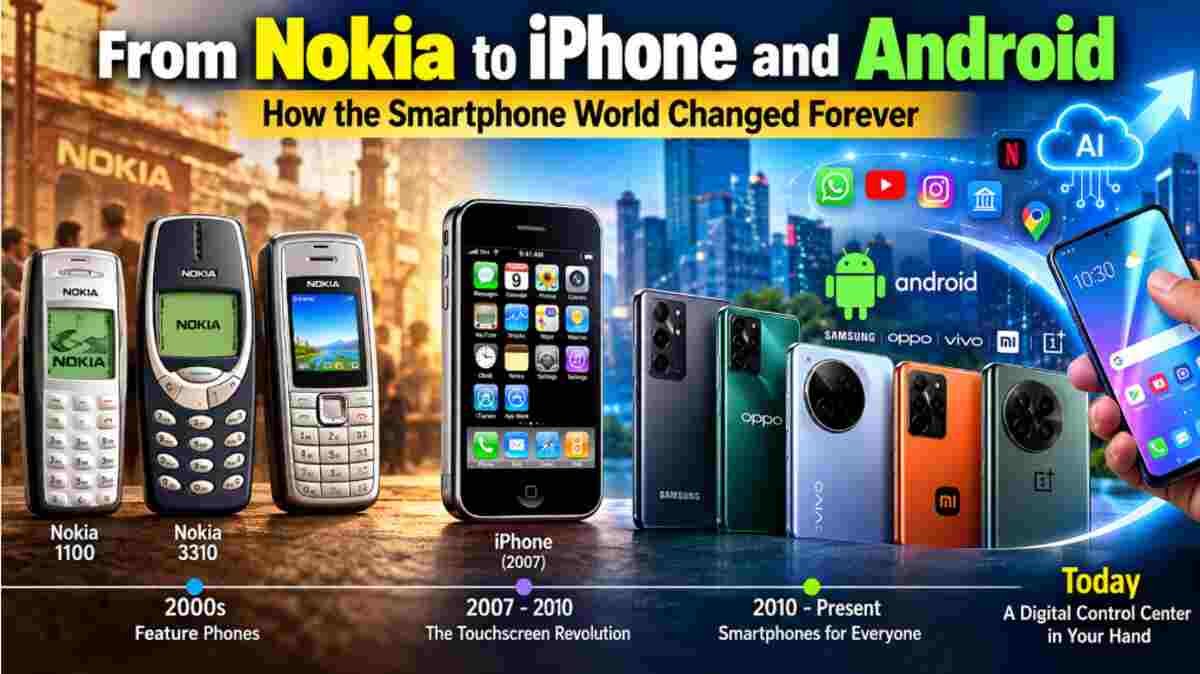
Nokia once dominated the mobile phone market, but the arrival of the iPhone and Android completely transformed the industry. This article traces the smartphone journey from simple feature phones to AI-powered devices, and explains how the mobile phone became the digital control center of everyday life.
There was a time when buying a mobile phone often meant buying a Nokia. Models such as the Nokia 1100 were popular for their durability, long battery life and easy-to-use design. In that era, a phone was mainly meant for making calls and sending SMS messages. As technology advanced, the mobile world began to change.
The touchscreen era then changed how people use phones. Apple’s iPhone gave the smartphone experience a new direction, while Android, through many different manufacturers, took smartphones to a much wider market.
Today, a smartphone can handle online banking, digital payments, video streaming, photography, office work and AI tools. So how did the mobile industry travel from Nokia’s dominance to the iPhone and Android era? Here is the full story.
The Nokia Era: When a Mobile Phone Meant Trust
In the early 2000s, Nokia was among the world’s leading mobile phone companies. Its handsets earned a loyal following by focusing on what buyers needed most at the time.
Why Nokia 1100 and Nokia 3310 Became Popular
The Nokia 1100 became popular for its sturdy build, good battery life and simple design. The Nokia 3310 is also remembered for its tough construction and classic mobile gaming experience.
Key Strengths of Nokia Phones
- Durable, long-lasting build quality
- Long battery life
- Simple, easy-to-use design
- Reliable calling and messaging
What Buyers Wanted from a Phone in the 2000s
Buyer priorities were very different from today. People wanted a phone that was easy to use, lasted a long time on a single charge, and made calls and sent messages without trouble.
Features That Were Not Yet a Priority
Mobile cameras, high-resolution displays, app stores and fast internet were not top priorities for every buyer. By meeting basic needs, Nokia built a strong reputation in this environment.
The First Signs of Change
The market was slowly shifting. Phones were no longer just a means of communication; they were becoming a gateway to the internet, entertainment and digital services.
How the iPhone Changed the Smartphone Experience in 2007
In 2007, Apple launched the first iPhone. Touchscreen phones were not a completely new idea at the time, but the iPhone popularized a multi-touch interface, a large display and simple navigation in a fresh way.
From Calling and Texting to a Complete Digital Experience
After the iPhone, the way people used mobile phones changed rapidly. Users no longer wanted to be limited to calls and messages. They wanted internet browsing, music, video, photography and other digital features on their phones.
The 2008 App Store Launch
The launch of the App Store in 2008 gave this shift even more momentum. Developers could now build apps for the iPhone, and the usefulness of smartphones kept growing.
New Factors Influencing Phone Purchases
- Camera quality
- Display
- Software and apps
- Overall user experience
A New Challenge for the Mobile Industry
This change set a new challenge before the entire industry. Companies now had to focus on better software and digital services along with good hardware.
Where Did Nokia Go Wrong?
Nokia’s challenge went beyond making phones with fresh designs. Competition in the smartphone market was quickly moving toward software and the app ecosystem.
Dependence on the Symbian Operating System
The company relied on the Symbian operating system for a long time, while iPhone and Android-based smartphones moved ahead with new user interfaces, apps and internet services.
The Windows Phone Partnership with Microsoft
Nokia later made several strategic changes and, through a partnership with Microsoft, introduced Windows Phone-based devices. However, it could not retain its earlier position against Apple and Android manufacturers in the fast-evolving smartphone market.
The Key Lesson for the Technology Industry
The shift offered a vital lesson: strong hardware or a popular brand alone is not enough. Understanding changing user needs, software and the developer ecosystem is equally important.
Why the Software Ecosystem Matters
Apps, services and developer support now shape how useful a smartphone is, which is why the software ecosystem became central to competition in the industry.
How Android Brought Smartphones to Everyone
While Apple focused on an integrated hardware and software experience with the iPhone, Android gave many manufacturers the opportunity to develop their own smartphones.
The First Commercial Android Phone and Major Brands
The first commercial Android phone reached the market in 2008. After that, Samsung, HTC, Motorola and other companies launched Android-based devices. Later, brands such as Xiaomi, OnePlus and Realme also offered smartphones at different price points.
More Choice for Every Budget
Android’s wide availability gave customers more options. People could choose a phone according to their budget and needs. From entry-level to premium segments, features such as internet access, apps, cameras and multimedia quickly became common.
Smartphones in India: Affordable Phones and 4G
In markets like India, affordable smartphones, mobile internet and the later expansion of 4G services strengthened this change even further.
From Costly Gadget to Everyday Essential
Gradually, smartphones stopped being limited to expensive gadgets. They became everyday essentials for study, work, entertainment, communication and digital payments.
From Feature Phone to Digital Control Center
The biggest smartphone revolution is visible not only in technology but also in people’s habits.
One Device Replacing Many
Earlier, people might need a separate camera for photography, a music player for songs and a computer for internet use. Today, many of these tasks can be done on a single smartphone.
How Smartphones Changed Daily Life
Mobile banking and digital payment systems like UPI have changed the way people pay. Maps and navigation have made it easier to find the way in unfamiliar places. Video calling and messaging apps have made it simple to stay in touch with people far away.
What a Smartphone Does Today
Communication
Calls, messages, email and video calls.
Finance
Mobile banking, bill payments and digital transactions.
Entertainment
Movies, web series, music and gaming.
Photography
Photos, video recording and editing.
Work and Study
Online meetings, documents, e-learning and productivity apps.
Digital Services
Online shopping, ticket booking, maps and government services.
This is why a smartphone is no longer just an electronic device. It has become an important part of our digital lives.
How 5G and AI Are Redefining the Smartphone
Today, competition between Apple and Android manufacturers goes beyond processors or camera megapixels.
AI Features in Modern Smartphones
Companies are working on AI-based features, better battery management, data privacy, security and improved connectivity with other devices. Modern smartphones use AI for photo editing, voice assistance, text summaries, live translation and more.
On-Device AI vs Cloud-Based AI
On some devices, AI processing happens directly on the phone, while other features depend on cloud services.
The Role of 5G Networks and Powerful Chips
5G networks and more powerful mobile chips have opened up new possibilities for smartphone use. However, the availability of these features depends on the phone model, its software and the network.
What Will Shape the Smartphone’s Future
The future of smartphones will also be decided by how useful, secure and easy for ordinary people the companies can make new technology.
What the Journey from Nokia to iPhone and Android Teaches Us
The history of mobile phones shows that market positions in the technology world can change at any time.
A Quick Recap of the Smartphone Journey
Brands like Nokia were once known for strong batteries, durable design and ease of use. Later, the iPhone gave a new identity to the touchscreen and an integrated software experience, while Android gave many manufacturers the chance to compete in the smartphone market.
From Calls and Messages to a Digital Hub
This change took the mobile phone beyond a device for calls and messages and made it the center of digital services, entertainment, work and communication.
Final Thoughts
The smartphone in our pocket now does many tasks that once required separate devices. The journey from Nokia to iPhone and Android is therefore not just the story of the mobile industry. It also shows how technology can transform our needs, habits and lifestyles.
Frequently Asked Questions (FAQs)
When was the first iPhone launched?
Apple launched the first iPhone in 2007. The App Store followed in 2008.
Why did Nokia lose its lead in the smartphone market?
Competition shifted toward software and app ecosystems. Nokia relied on the Symbian operating system for a long time and, even after a partnership with Microsoft for Windows Phone devices, could not retain its earlier position.
When did the first commercial Android phone arrive?
The first commercial Android phone reached the market in 2008.
How did Android make smartphones accessible to more people?
Android allowed many manufacturers, such as Samsung, HTC, Motorola, Xiaomi, OnePlus and Realme, to offer smartphones at different price points, giving buyers more choice for their budget.

