

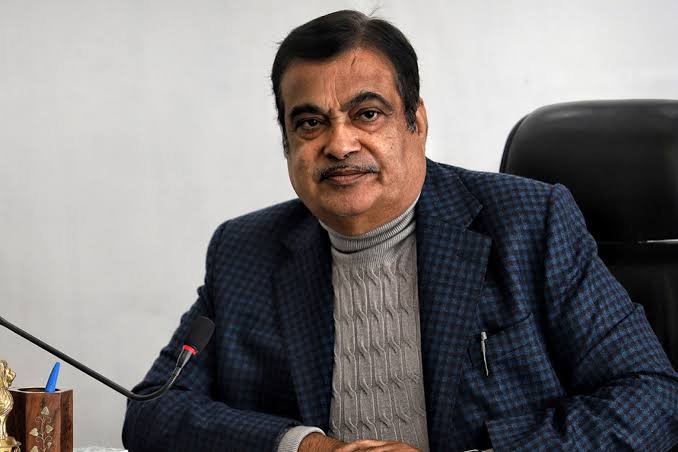
India’s EV Market : India’s electric vehicle industry could be heading towards a major expansion over the next few years. Union Minister for Road Transport and Highways Nitin Gadkari has said that the country’s EV market has the potential to reach Rs 20 lakh crore by 2030, while creating as many as five crore employment opportunities across the sector.
Speaking at a summit organised by the CII-ITC Centre of Excellence for Sustainable Development, Gadkari outlined an ambitious outlook for electric mobility as well as India’s broader automobile industry.
The minister’s projections come as electric vehicles continue to increase their presence on Indian roads and domestic manufacturers expand their EV portfolios.
57 Lakh Electric Vehicles Already Registered in India
According to Gadkari, around 57 lakh electric vehicles are currently registered in India, while EVs have reached approximately 7 percent market penetration.
These numbers underline the scale at which electric mobility has already started developing in the country. However, the government’s longer-term ambitions suggest that the present adoption level could represent only an early stage of India’s transition towards alternative mobility.
Growing consumer interest, expansion of charging infrastructure, new vehicle launches and increased manufacturing capacity could play an important role in determining how quickly this transition progresses.
India Faces a Major Electric Bus Supply Gap
Electric buses are another area where Gadkari sees significant opportunity.
India currently has annual demand for around one lakh electric buses, according to the minister. Domestic manufacturing, however, stands at only around 50,000 to 60,000 EV buses annually.
The difference between demand and existing production capacity points to considerable room for manufacturers to expand operations.
For the EV ecosystem, higher production could have effects beyond vehicle manufacturing itself. Batteries, components, charging infrastructure, maintenance, software, logistics and related services are all likely to form part of the industry’s wider employment and investment landscape.
India Wants World’s No. 1 Automobile Industry
Gadkari also reiterated a larger goal for India’s automobile sector.
The government wants to make India’s automobile industry the largest in the world within the next five years.
Acknowledging the scale of that ambition, Gadkari said achieving the number-one position would be difficult but not impossible.
He pointed towards India’s trained workforce, competitive manufacturing costs and vehicle quality as factors that could support the country’s ambitions in the global automotive market.
Major international automobile companies already manufacture vehicles in India, while domestic manufacturers have also developed substantial export businesses.
Gadkari specifically highlighted Bajaj Auto and Hero MotoCorp, noting that the two major two-wheeler manufacturers export more than half of their production.
Indian Automobile Industry Has Expanded Rapidly
India’s overall automobile industry has also witnessed significant growth.
Gadkari said that when he took charge of the transport ministry, the size of the country’s automobile sector stood at around Rs 14 lakh crore. It has since expanded substantially, with the minister putting its current scale at roughly Rs 22-23 lakh crore.
For comparison, he cited the US automobile industry at approximately Rs 78 lakh crore and China’s at around Rs 47 lakh crore.
Closing that gap would require India to increase manufacturing, strengthen exports and continue developing emerging areas such as electric vehicles and alternative fuels.
Reducing India’s Dependence on Fossil Fuels
The EV push is not only about expanding the automobile industry.
Reducing India’s dependence on imported fossil fuels is another major part of the government’s transportation strategy.
Gadkari said India spends around Rs 22 lakh crore on fossil fuel imports, while their consumption also contributes to pollution.
Electric mobility, biofuels and other alternative energy sources could therefore have both economic and environmental implications.
The minister described biofuel as an important part of the future of transportation and linked the development of better highways with the adoption of alternative fuels.
Government Targets Lower Logistics Costs
Another priority highlighted by Gadkari is India’s logistics cost.
According to the minister, the expansion of expressways and economic corridors has helped bring logistics costs down from around 16 percent to 10 percent, citing findings from a report prepared by IIT Chennai, IIT Kanpur and IIM Bangalore.
The government now wants to reduce logistics costs further to around 8 percent.
Lower transportation and logistics expenses could make Indian products more competitive internationally, particularly as the country attempts to strengthen its position as a global manufacturing and automobile-export hub.
EV Growth Could Reshape India’s Auto Industry
A Rs 20 lakh crore EV market would represent far more than an increase in electric car and two-wheeler sales.
The transition could create opportunities across battery manufacturing, electric buses, charging networks, automotive components, research and development, software, vehicle servicing and several supporting industries.
Gadkari’s projection of five crore jobs by 2030 reflects this broader EV ecosystem rather than vehicle manufacturing alone.
With millions of EVs already registered and manufacturers investing in electric mobility, the coming years could prove crucial for India’s transition. Whether the industry reaches the projected Rs 20 lakh crore mark will ultimately depend on how quickly manufacturing, infrastructure, technology and consumer adoption develop together.

