

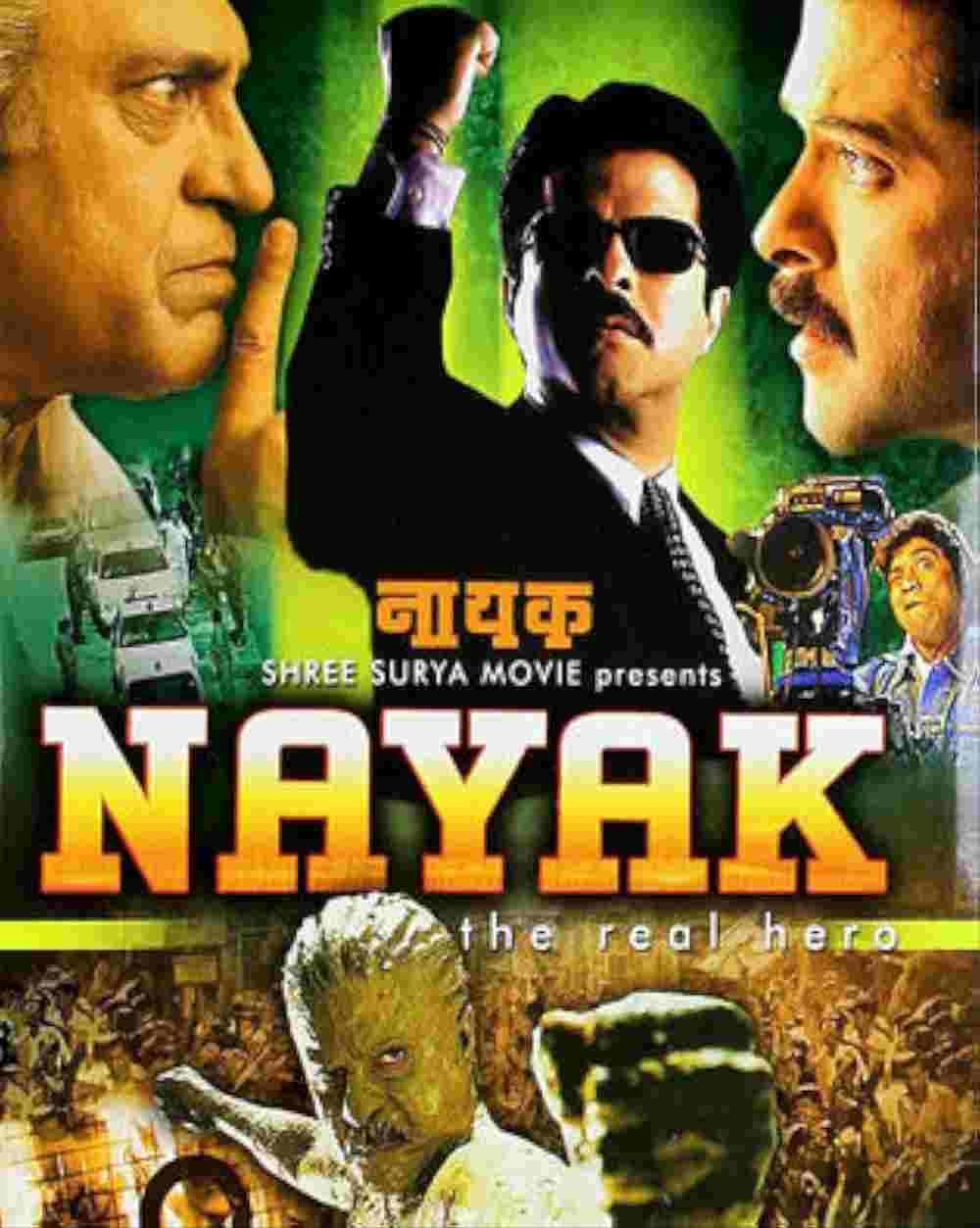
Though Nayak failed at the box office when it released in 2001, the political drama remains relevant and continues to find a new audience on television screens 25 years later.
Twenty-five years after its release, Nayak remains one of Bollywood’s most enduring political dramas. Directed by S. Shankar, the film failed to make a major impact in theatres when it first arrived, but its television run changed its fortunes and eventually turned it into a cult hit.
The film stars Anil Kapoor as television journalist Shivaji Rao, who challenges Maharashtra Chief Minister Balraj Chauhan, played by Amrish Puri, over corruption and poor governance. As their confrontation intensifies, the Chief Minister challenges Shivaji to run the state for 24 hours.
What follows is the transformation of an ordinary journalist into a chief minister who attempts to tackle corruption and administrative problems. At the same time, the film explores the personal and moral compromises that come with entering politics.
The Story Behind Nayak’s Box Office Debacle
Despite its strong storyline, Nayak failed to make an impact theatrically, with the timing of its release emerging as one of the significant factors.
The film released in theatres on September 7, 2001. Just four days later, the September 11 terrorist attacks in the United States dominated global media coverage. Television networks focused extensively on the tragedy, while audiences shifted their attention away from entertainment, affecting the film’s theatrical business.
Producer A. M. Rathnam later attributed the film’s poor box-office performance to the disruption caused by the attacks. However, the film found a much larger audience when it began airing on satellite television.
Those who had missed Nayak in theatres eventually discovered it on television. Its political message and depiction of an ordinary man taking on the system struck a chord with audiences and helped the film gain a cult following.
Before Anil Kapoor, Aamir Khan and Shah Rukh Khan Were Considered
Anil Kapoor was not S. Shankar’s first choice to play Shivaji Rao.
In a 2001 interview with Filmfare, Shankar revealed that Aamir Khan was approached for the role first. However, there was reportedly some miscommunication between the two. Shankar then approached Shah Rukh Khan, who was more receptive to the project but eventually turned it down.
Shah Rukh Khan did not want to play a television journalist again so soon after portraying a similar character in Phir Bhi Dil Hai Hindustani. He nevertheless supported the project and appeared as a special guest at Nayak’s music launch.
The role eventually went to Anil Kapoor, whose name was suggested by his brother Boney Kapoor, the film’s producer. Shankar was impressed by Kapoor’s discipline and professionalism, and their collaboration resulted in one of the actor’s most memorable performances.
Nayak’s Real-Life Political Impact
The impact of Nayak eventually extended beyond cinema. Anil Kapoor’s portrayal of Shivaji Rao became closely associated with the idea of an ordinary man challenging the political establishment.
Over the years, several real-life political events and personalities have been compared with the film’s storyline. Its central premise, that citizens have the right to question those in power, has continued to resonate long after its theatrical release.
The film also prompted political parties to approach Anil Kapoor about entering politics. Earlier this year, Kapoor told The Indian Express that he had received offers from several political parties but declined them because he did not believe he could commit to politics to the extent the profession demanded.
25 Years Later, Nayak Remains Relevant
Nayak may have been a box-office disappointment when it was released, but its fortunes changed with time. Its television success, political themes and Anil Kapoor’s performance eventually transformed it into a cult film.
Twenty-five years later, the story of a journalist challenging authority and an ordinary man attempting to change a flawed system continues to resonate with viewers. While the film’s vision of political change may be idealistic, its message remains clear: recognising a problem with the system is the first step towards changing it.

