

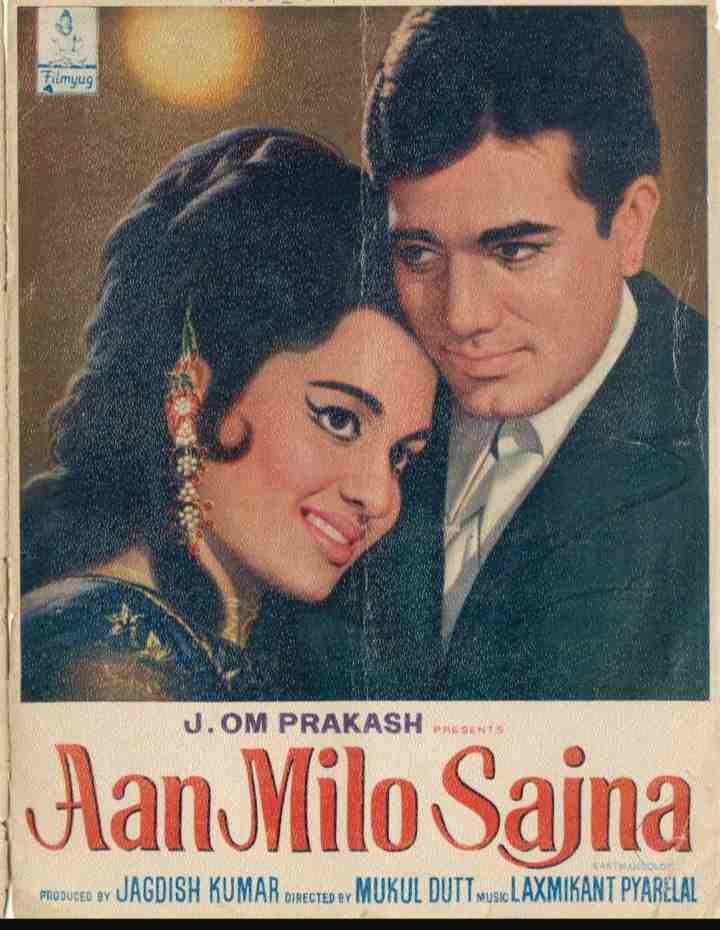
Mumbai:Rajesh Khanna (1942-2003), considered as the first superstar of Hindi cinema, enjoyed a spectacular 17 consecutive hit films from 1969 to 1971. One of them was the 1970s romantic musical film “Aan Milo Sajna” which was released along with actress Asha Parekh, whom he was a popular pairing with.
The film’s popularity was such that its trailer was reportedly shown during the intervals of other films released in 1970. Whenever Rajesh Khanna appeared on screen, audiences would respond with great enthusiasm.
AAn Milo Sajna featured Rajesh Khanna, Asha Parekh, Nirupa Roy and Vinod Khanna. The story revolves around Savitri Chaudhary, a wealthy widow who is unhappy with her son Anil and does not want to leave her property to him. Anil brings a girl named Varsha to win his mother’s affection. Varsha, who is actually Deepali, stays with Savitri and takes care of her.
Savitri becomes impressed with Varsha and transfers her property in her name. Meanwhile, Varsha meets Ajit, played by Rajesh Khanna, in the village. Ajit is portrayed as a kind-hearted young man who helps the poor, and the two eventually fall in love.
The film was directed by J. Om Prakash, while its music was composed by Laxmikant-Pyarelal and lyrics were written by Anand Bakshi. One of the film’s popular songs, “Achha To Hum Chalte Hain”, reportedly came about during a difficult phase of composing the tune. The song eventually became a romantic favourite.
The soundtrack of Aan Milo Sajna featured six songs. “Achha To Hum Chalte Hain” was sung by Kishore Kumar and Lata Mangeshkar, while “Jawani O Diwani Hai” was sung by Kishore Kumar. Mohammed Rafi lent his voice to “Koi Nazrana Lekar Aaya Hoon”, while “Rang Rang Ke Phool Khile” was sung by Lata Mangeshkar and Mohammed Rafi. “Tere Karan Mere Sajan” was sung by Lata Mangeshkar, and “Palat Meri Jaan Tere Qurban” was sung by Asha Bhosle.
With its romantic storyline, memorable performances and music featuring the voices of Kishore Kumar, Lata Mangeshkar, Mohammed Rafi and Asha Bhosle, Aan Milo Sajna remains associated with Rajesh Khanna’s celebrated period in Hindi cinema.

